
Financial Forecasts
Understanding the Financial Future of Lebanon City Schools
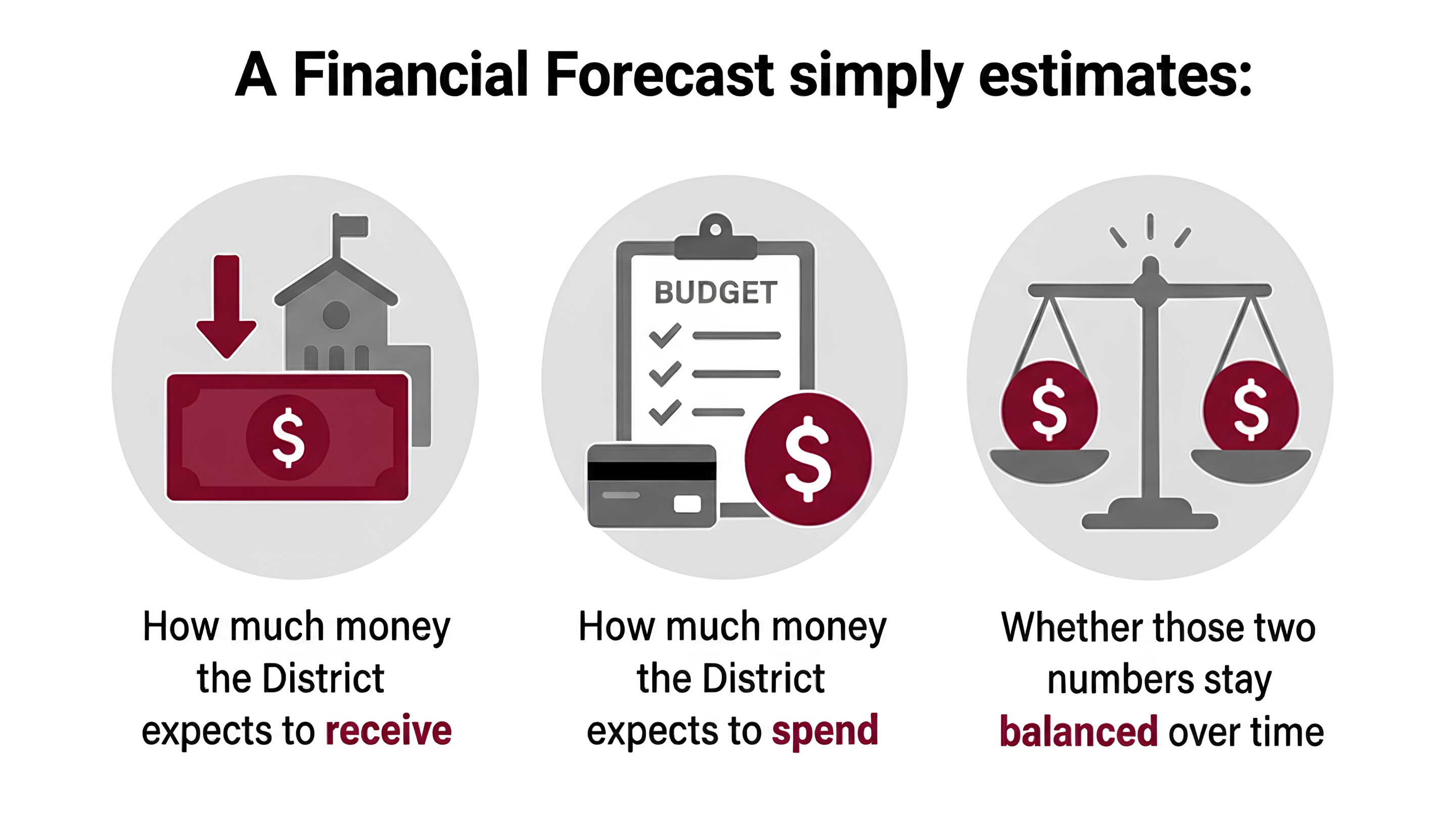
Lebanon City Schools carefully plans several years ahead, so that we can continue providing strong opportunities for students while responsibly managing taxpayer dollars.
One of the main tools we use is called a Financial Forecast.
.png)
School districts do not wait until a problem appears. Every district in Ohio must prepare a Financial Forecast twice each year.
This helps districts:
- identify future financial challenges
- adjust spending if needed
- plan responsibly
- keep the community informed
This page explains what the current forecast shows, what it means for our schools, and how we are planning ahead. Previous District forecasts are linked at the bottom of the page.
Financial Forecast: At a Glance
 (2).png)
What the August 2026 Financial Forecast Shows:
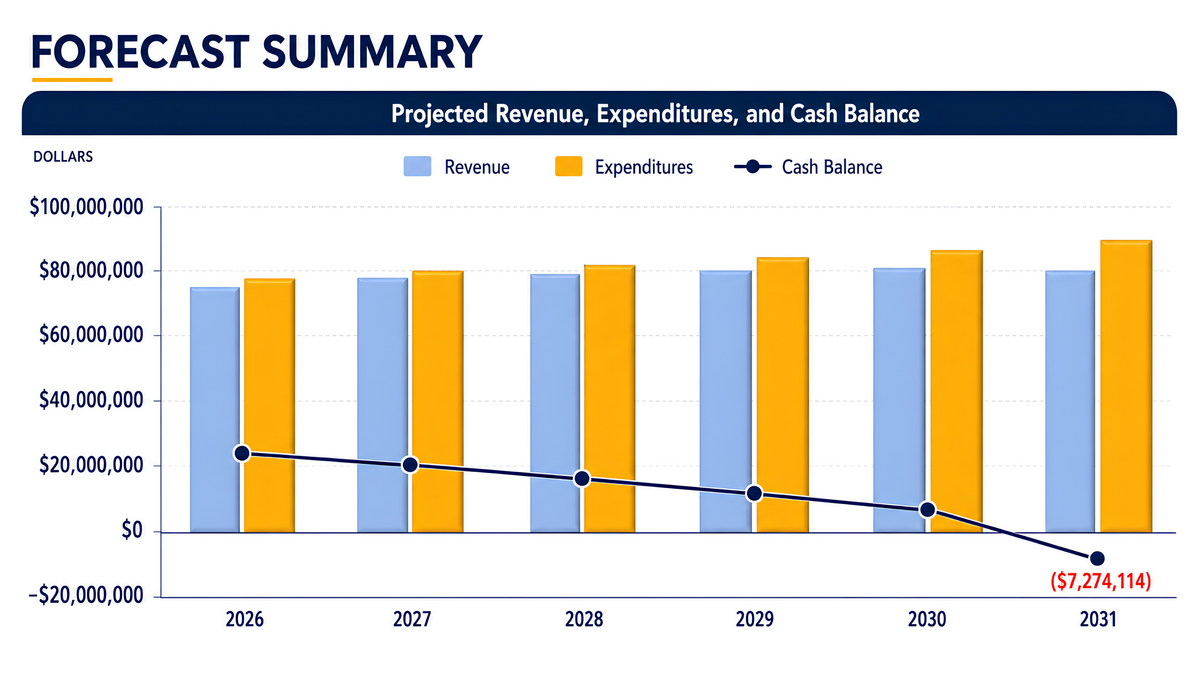
1. Revenues are growing, but only slightly.
Recent property tax reform passed by the Ohio legislature in 2025 significantly changed how much revenue school districts can expect in the future.
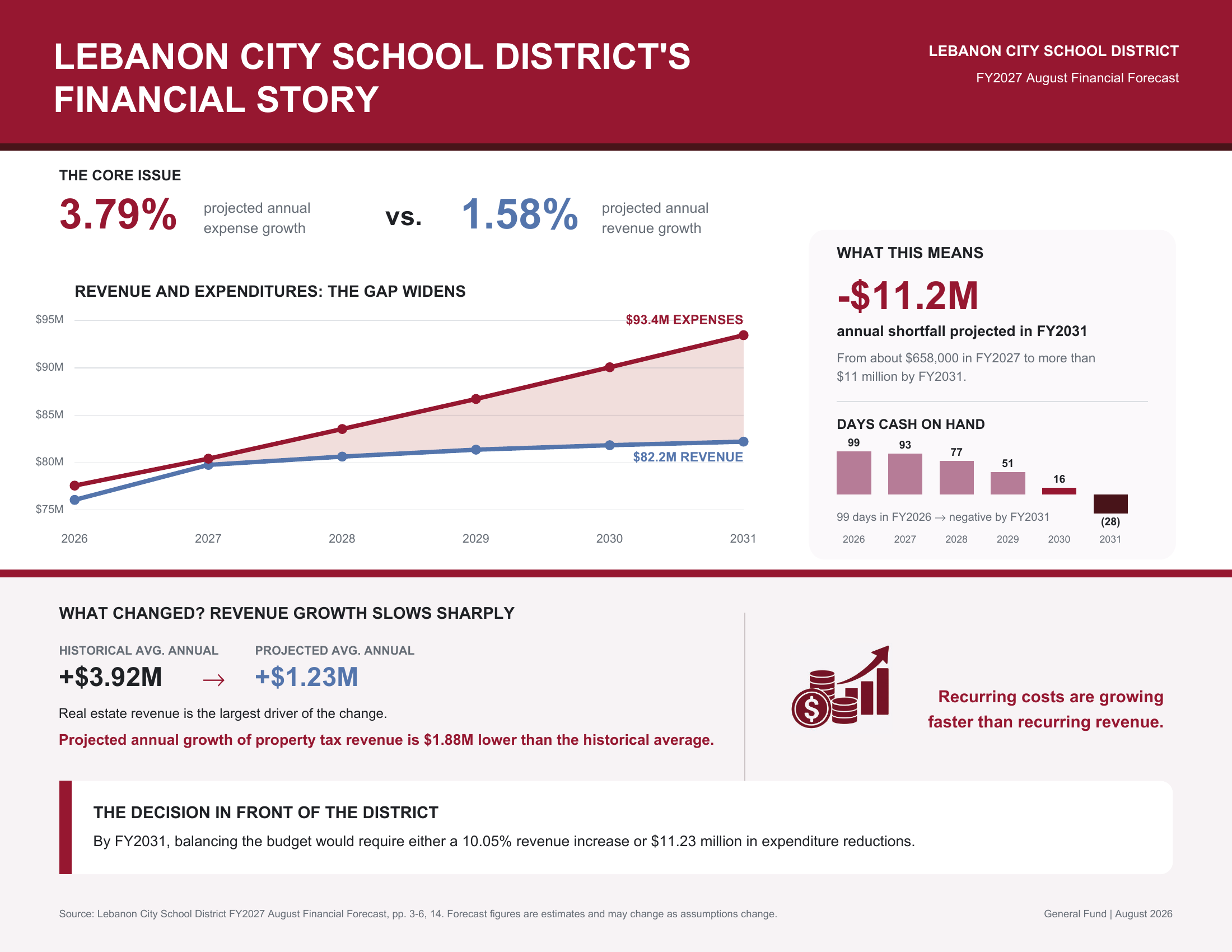
In past years, District revenue grew about 5% per year. Looking forward, our forecast now shows that revenues will grow closer to 2% per year.
This change is projected to reduce Lebanon City Schools’ expected revenue by approximately $13 million over the next four years.
The District has worked for many years to delay the need for new taxes through careful budgeting and cost control. (Our last request for new money was in November 2019.) However, reductions of this size cannot be fully absorbed through staffing attrition and operational savings alone.
BIG IDEA: The District’s income is growing, but slowly.

2. Costs continue to rise.
Just like households and businesses, the cost of running schools increases each year.
Major cost increases include:
- Staff salaries and employee health insurance
- Utilitiesand transportation
- Classroom supplies
BIG IDEA: Our expenses are expected to grow faster than our revenue in the Financial Forecast.
.png)

3. Over time, our cash savings will have to cover a widening gap between higher costs and lower revenue increases.
The current Financial Forecast shows that expenses will exceed revenue in all years estimated in the forecast.
This does NOT mean that the District is in immediate trouble. It means that we need to plan ahead and make decisions early.
.png)
School Districts are limited to receiving local dollars, State funding, and Federal funding.
Local property tax increases are subject to significant limitations in growth. State and Federal funding levels are set by and subject to general legislative processes.
Costs increase every year, regardless of whether or not revenue grows.
Understanding Cash on Hand
School districts maintain savings so they can operate throughout the year and manage unexpected expenses.
This savings level is often measured as “Days Cash on Hand.”
Lebanon City Schools aims to maintain 90-120 days of operating cash.
The current Financial Forecast shows that expenses will grow faster than revenue, so the cash reserves (aka, “Days Cash on Hand”) gradually decline to about -28 days by 2031 unless the District makes a change in its finances.
.png)
Why does the District have millions of dollars in the bank?
School districts must keep enough “cash on hand” to operate throughout the year. Expenses such as payroll, transportation, utilities, and classroom supplies occur every month, but much of the District’s revenue arrives only a few times per year through property tax and state funding payments.
The balance you see at the bank is the working cash needed to pay bills, keep schools operating between revenue payments, and maintain financial stability for students and taxpayers.
What the District Is Doing Now to Prepare for the Future
Lebanon City Schools works hard to manage taxpayer dollars responsibly. If we do nothing to prepare for our future, the District’s cash reserves will be depleted by the end of the forecasted period.
This pattern is common for school districts in Ohio since most local tax revenue does not automatically grow with inflation but serves as the primary source of income for districts. Eventually districts must either:
- Reduce programs and services
- Or ask voters to consider additional funding
Some steps Lebanon City School District is taking to plan for our future include:
- Building responsible budgets, and monitoring spending carefully
- Evaluating class sizes and student needs, and allowing natural attrition to right-size District staffing levels as applicable
- Evaluating options that provide additional funding
- Planning with the Community Advisory Audit Committee and the Board of Education
Looking Ahead
Lebanon City Schools is committed to being transparent about our financial future.
Financial forecasts allow us to identify challenges early so that we can:
- Plan responsibly
- Communicate openly with the community
- Make thoughtful decisions about the future
The Lebanon City School District Board of Education voted unanimously to place a 10-year, 1.0% Earned Income Tax Levy on the November 3 ballot. If the levy passes, the Board of Education will roll back 2.15 mills of property taxes, which will provide property tax savings to homeowners. Click here to learn more.
.png)
Oversight and Transparency
Lebanon City Schools’ finances are reviewed by multiple groups. These layers of oversight help ensure that taxpayer funds are used responsibly.
Financial Forecast Documents
If you are interested in reviewing the detailed Financial Forecast reports for the District, you can find them here:
| FINANCIAL FORECASTS | PRESENTATIONS TO THE BOARD OF EDUCATION |
| February 2026 | |
| October 2025 | |
| May 2025 | |
| November 2024 |